AI Recruitment Software vs Traditional ATS | 2026 Guide
Discover the key differences between AI recruitment software and traditional applicant tracking systems, and how modern hiring teams are improving efficiency in 2026.
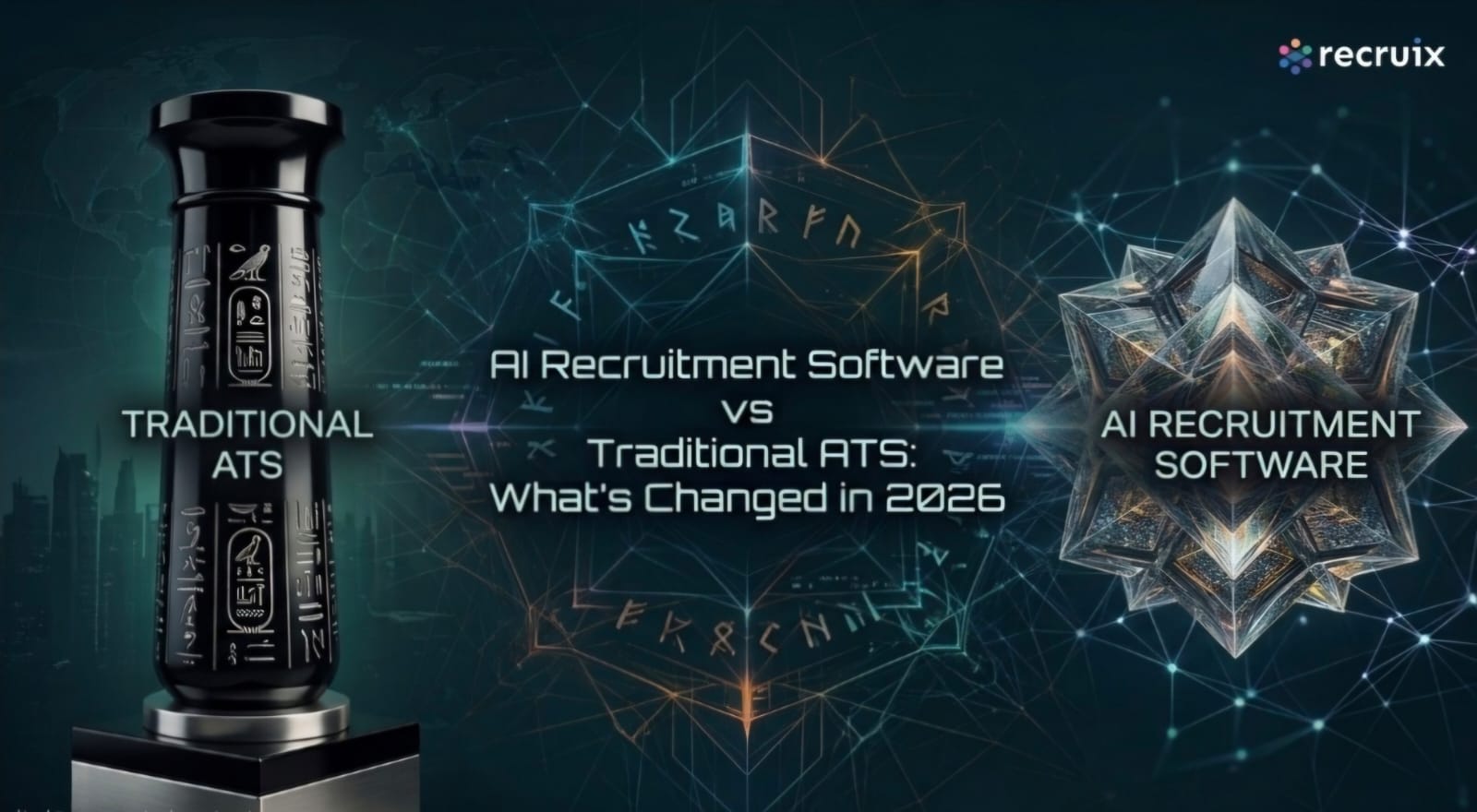
Recruitment Has Changed but Has Your Hiring Technology?
A decade ago, implementing an Applicant Tracking System (ATS) was considered a major milestone for HR teams. It helped centralize resumes, streamline hiring workflows, and replace spreadsheets and email chains with a structured recruitment process.
Fast forward to 2026, recruitment looks very different.
Organizations are managing larger applicant volumes, hiring across multiple locations, competing for niche talent, and dealing with increasing expectations from candidates. While traditional ATS platforms still provide structure, many businesses are now looking beyond basic applicant tracking toward AI-powered recruitment software.
The shift isn't about replacing recruiters; it's about helping them make better decisions faster.
What is a Traditional ATS?
A traditional Applicant Tracking System is designed to organize recruitment activities by:
Posting jobs
Collecting applications
Tracking candidate progress
Scheduling interviews
Managing offers
Generating basic reports
These systems brought much-needed structure to recruitment, especially for organizations moving away from manual processes.
However, many still rely heavily on manual screening, keyword searches, and recruiter intervention throughout the hiring journey.
What Makes AI Recruitment Software Different?
AI recruitment software builds upon the foundation of an ATS by introducing intelligent automation and data-driven decision-making.
Instead of simply storing applications, AI helps organizations:
Rank candidates based on skills and experience
Identify transferable skills
Reduce manual resume screening
Predict candidate-job fit
Improve candidate engagement
Surface hidden talent within existing databases
Generate recruitment insights automatically
The goal is not to replace recruiters but to eliminate repetitive administrative work.
Key Differences
Traditional ATS | AI Recruitment Software |
Stores resumes | Understands resume content |
Keyword matching | Contextual skill matching |
Manual shortlisting | AI-assisted ranking |
Static reporting | Predictive recruitment analytics |
Manual communication | Automated candidate engagement |
Limited insights | Intelligent hiring recommendations |
Why Companies Are Moving Toward AI
Several factors are driving AI adoption across recruitment:
Increasing Hiring Volumes
Recruiters often review hundreds of applications for a single vacancy. AI helps prioritize qualified candidates faster.
Better Candidate Experience
Automated communication keeps applicants informed throughout the recruitment process, reducing uncertainty and improving employer branding.
Faster Time-to-Hire
AI reduces repetitive administrative work, allowing recruiters to focus on interviews and hiring decisions.
Data-Driven Decisions
Instead of relying solely on intuition, recruiters gain insights from hiring trends, sourcing effectiveness, and candidate quality.
AI Doesn't Replace Recruiters
One common misconception is that AI replaces recruitment teams.
In reality, AI supports recruiters by handling repetitive tasks while humans continue making final hiring decisions.
Successful organizations combine technology with human expertise.
Looking Ahead
As recruitment becomes increasingly competitive, hiring technology must evolve beyond simply tracking candidates.
Modern recruitment platforms are expected to automate routine work, improve decision-making, and create a better experience for recruiters and candidates alike.
Organizations evaluating recruitment technology should focus not only on current needs but also on how their platform will support future growth.
Frequently Asked Questions
Is AI replacing recruiters?
No. AI assists recruiters by automating repetitive tasks while human recruiters continue making hiring decisions.
Can AI reduce recruitment time?
Yes. AI can significantly reduce manual resume screening and administrative work, helping teams hire faster.
Is AI recruitment only for large enterprises?
No. Businesses of all sizes are increasingly adopting AI recruitment tools to improve efficiency.
References
Society for Human Resource Management (SHRM)
LinkedIn Talent Solutions
Deloitte Human Capital Trends
World Economic Forum – Future of Jobs Report
McKinsey & Company – AI in the Workplace
The Recruix team shares practical guidance for smarter, more effective hiring.
Stay Ahead of the Future of Hiring
Get recruitment insights, AI hiring trends, and workforce intelligence delivered directly to your inbox.
Ready to Transform Your Hiring Process?
See how Recruix helps organizations hire smarter through AI-powered recruitment intelligence.
Book Demo